

The Stuyvesant Square Bagel Guide
Discover the best bagels near Stuyvesant Square Park, learn a little history, and join our community in celebrating this iconic New York treat!
A Bagel With a View
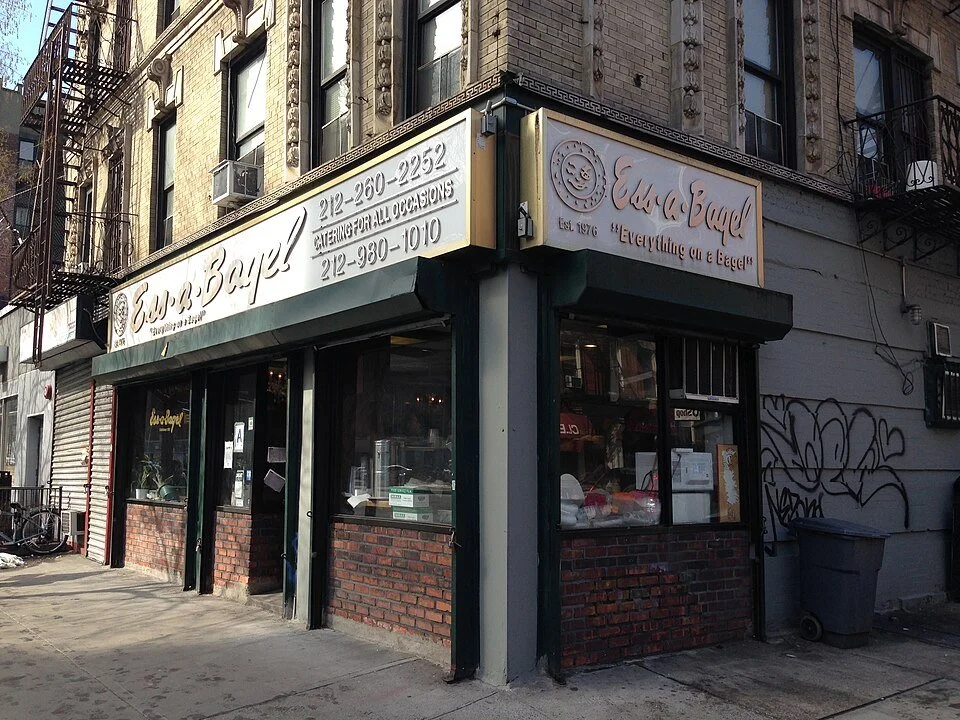
Ess-a-Bagel, founded in 1976 by Florence and Gene Wilpon and Aaron Wenzelberg, quickly became a New York favorite—drawing on Austrian baking traditions and earning top honors in the Tri-State area within just two years. (Photo credit: victorgrigas/Wikimedia Commons)
For over 40 years, locals have enjoyed the perfect start to a New York day: a freshly baked bagel from a nearby shop, eaten on a park bench with the morning sun glinting off the trees. A March 2026 roundup by The Infatuation named Ess-a-Bagel, just a short walk from the park, among the best bagels in the city—and even suggested Stuyvesant Square Park as the perfect place to enjoy one. A longtime favorite bagel shop, its puffed, slightly sweet bagels paired with scallion cream cheese are a New York classic.
Want to share your love of bagels in the park? Send photos of yourself enjoying a bagel on a Stuyvesant Square Park bench to hello@spnanyc.org, and we may feature them!
A Short History of the Bagel 🥯
Bagels first arrived in New York with Eastern European Jewish immigrants in the late 19th century, particularly those settling on the Lower East Side. Their name comes from the Yiddish beygl, derived from the Middle High German bügel, meaning “ring” or “bracelet”—a reference to their distinctive circular shape. That shape was practical as well as symbolic: easy to stack, carry, and even string together for sale in bustling city streets.
The bagel’s defining technique—boiling the dough before baking—dates back centuries. This process creates the glossy crust and dense, chewy interior that set bagels apart from other breads. In early New York, bagels were made by hand, often in small basement bakeries where workers labored overnight so fresh batches would be ready by morning. By the early 20th century, bagel production in the city was tightly controlled by a bakers’ union that guarded its methods and helped establish a consistent, high-quality product.
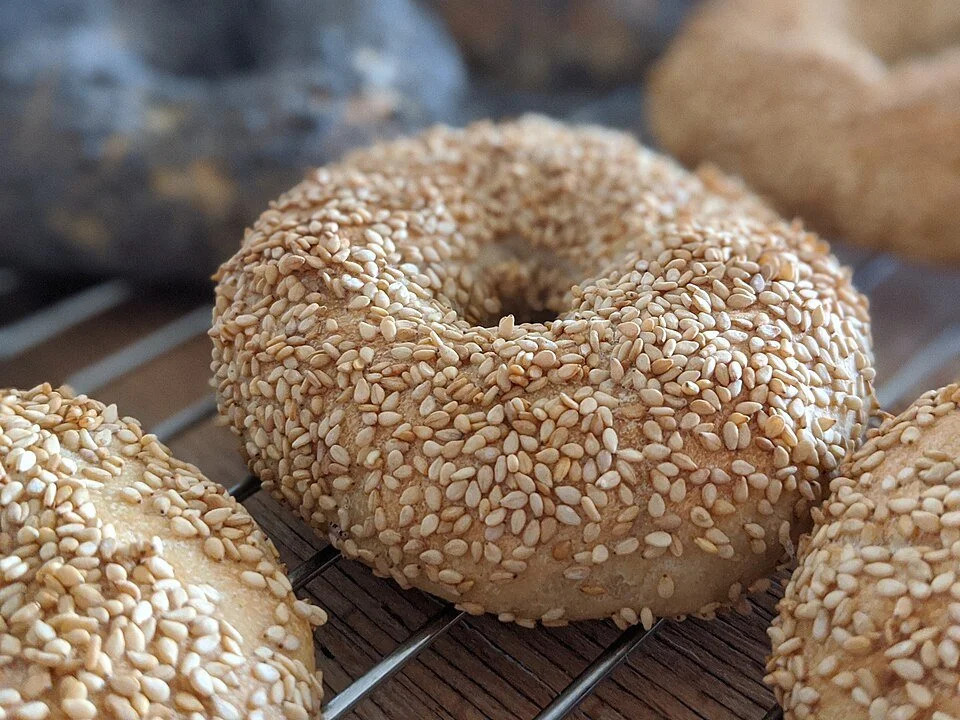
The sesame bagel, a staple of modern bagel shops, traces its roots to traditional Jewish bakeries in Poland and to similar Near Eastern breads like the Turkish simit. While the boiled Polish bagel gained popularity in the 16th-17th centuries, sesame-covered varieties—often called ka’ak in the Middle East or Jerusalem bagels—have a longer, parallel history of baking rather than boiling, offering a softer texture than the traditional boiled bagel. (Photo credit: Shishma/Wikimedia Commons)
Originally, bagels were a humble, working-class food—affordable, filling, and portable. Street vendors sold them from pushcarts, and they were often eaten plain or with simple spreads like butter. Over time, as Jewish delis and appetizing shops flourished, bagels became closely associated with toppings such as cream cheese, smoked salmon (lox), whitefish salad, and other classic accompaniments now synonymous with New York food culture.
By the mid-20th century, bagels began to move beyond immigrant neighborhoods and into the broader American mainstream, aided by mechanized production and growing demand. Yet New York remained—and still is—the spiritual home of the bagel. Many insist that the city’s water contributes to its unique texture, though technique and tradition are just as important.
Today, the New York bagel is a cultural icon: dense, glossy, generously topped, and deeply tied to the rhythms of city life. Whether grabbed on the go or savored slowly on a park bench, each bagel carries with it a piece of history—one that continues to unfold in neighborhoods like Stuyvesant Square.
Did You Know?
Everything bagels weren’t always “everything.” The classic topping mix only gained popularity in the 1970s.
Bagels were street food first. Pushcarts in Jewish neighborhoods brought bagels directly to early New Yorkers.
A bagel with a view: Eating a bagel in Stuyvesant Square connects you to generations of New Yorkers enjoying city life and nature at once.
Google Map: Local Bagel Shops
Click below to explore your local bagel options near Stuyvesant Square Park:
[View the Stuyvesant Square Bagel Map on Google Maps]
The “Stuyvesant Square Bagel”?
Do you have the recipe for the ultimate bagel? We’re looking for a signature creation to dub “The Stuyvesant Square Bagel.” Submit your recipe and tell us what makes it special—whether it’s a flavor twist, topping combo, or classic perfection. Winners may have their bagel featured in a future SPNA guide!
📧 Send recipes to hello@spnanyc.org.
Share Your Local Bagel Stories
What’s your favorite bagel memory in or around Stuyvesant Square? Are you a cream cheese and lox on poppy seed person or a whitefish salad on pumpernickel fan? Share your story and photo with us—we love hearing how our community enjoys this classic treat.
📧 Email submissions: hello@spnanyc.org
Walk, Listen, Enjoy
Walk off those bagel calories with our Stuyvesant Square Playlist on Spotify (about 1 hour). Pair music from Dvořák, Copland, Ellington, Philip Glass, and more with the park’s art, history, and quiet corners for a truly immersive experience.
[Listen to the Stuyvesant Square Playlist]
Explore, taste, and share! Stuyvesant Square Park and its surrounding streets are a little slice of New York history—and nothing captures it quite like a bagel in the park.