

Stop the Bleed: Community Spotlight
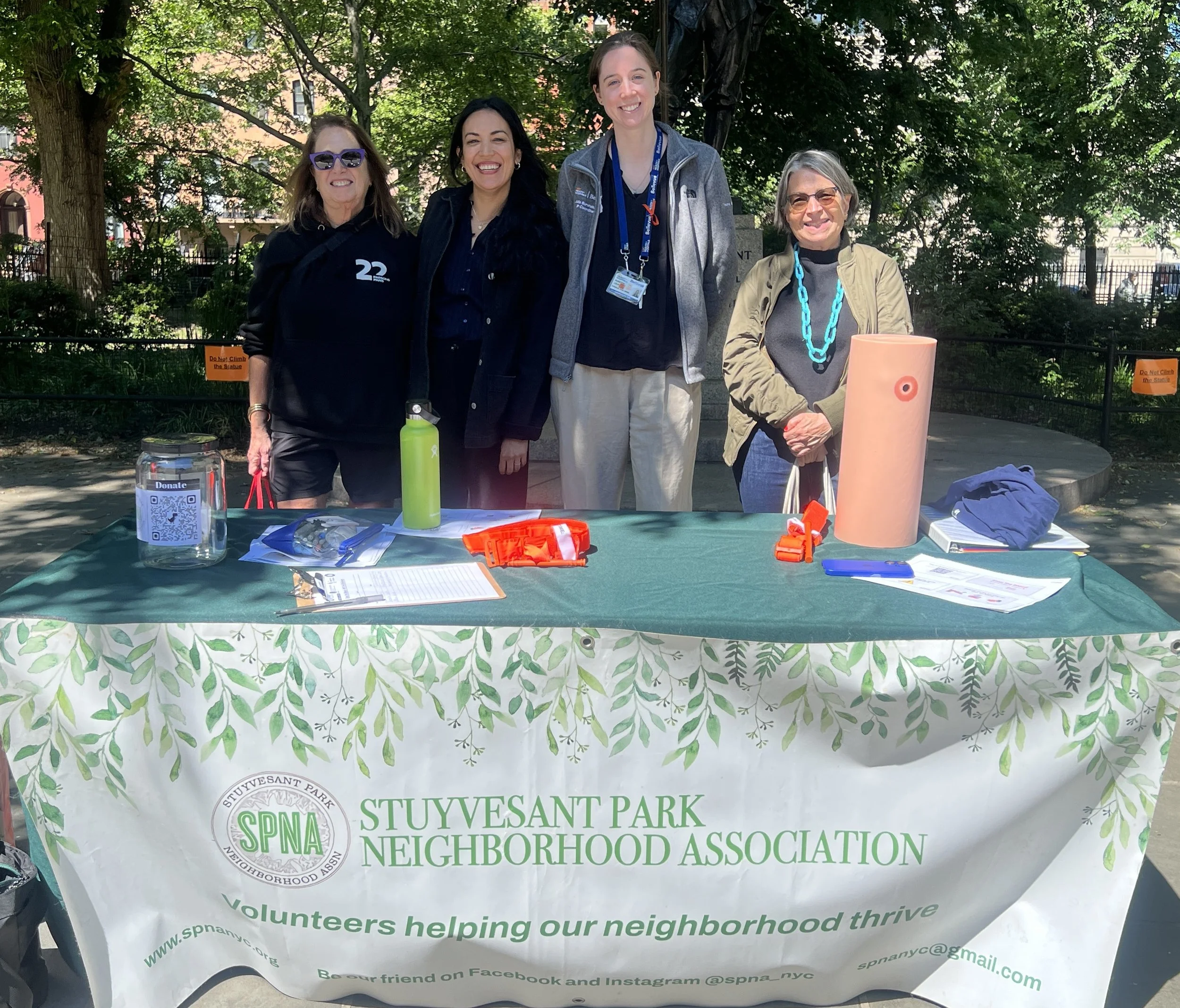
Community members gathered in Stuyvesant Square Park on May 15 to learn lifesaving bleeding-control skills from Julia Burstein (second from right) and the Injury Prevention team at NYC Health + Hospitals/Bellevue. (Photo: Reynard Loki/SPNA)
Fight, flight, or freeze. In moments of crisis, we all react differently. Stop the Bleed is a first-aid course that helps you think through what you would do in a medical emergency and practice simple lifesaving skills. Stop the Bleed focuses on three quick actions: putting pressure on a wound, packing a wound, and using a tourniquet. These skills can be lifesaving for someone who is quickly losing blood—the number one cause of preventable death after injury is blood loss.
As a Level I Adult and Level II Pediatric Trauma Center, the clinical teams at NYC H+H/Bellevue Hospital have treated all types of serious injuries. What many people don’t know is that Bellevue also trains local community members in first aid to empower them during a medical emergency. Our Injury Prevention team hosts free public Stop the Bleed and CPR classes, and has led Stop the Bleed trainings at Stuyvesant Square Park, local schools, community organizations, older adult centers, workplaces, and more. Bringing this class to the community and meeting people where they are is a crucial way to spread this lifesaving information and make it accessible to the public.
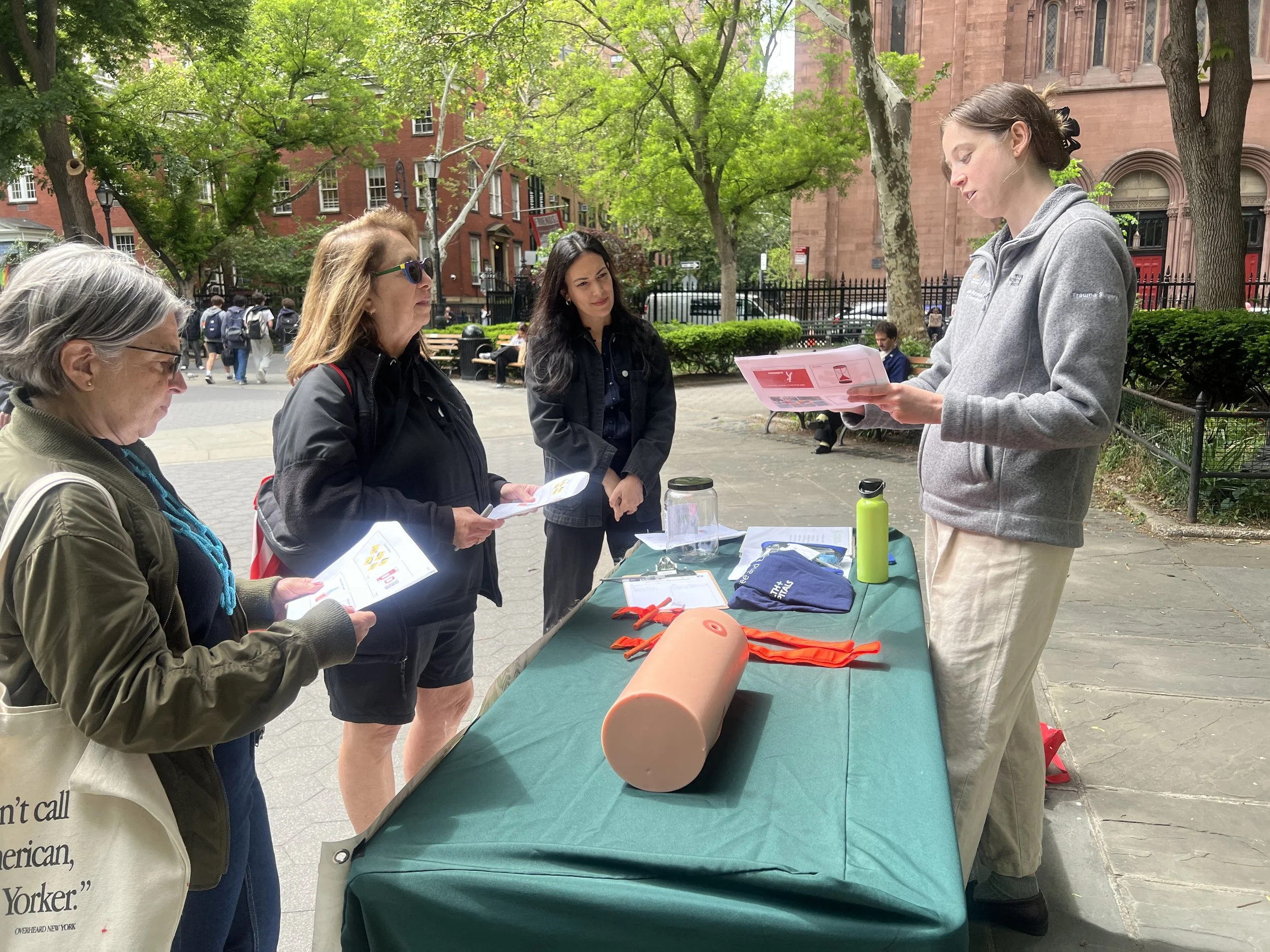
Community members gathered in Stuyvesant Square Park on May 15 to learn lifesaving bleeding-control skills from Julia Burstein and the Injury Prevention team at NYC Health + Hospitals/Bellevue. (Photo: Reynard Loki/SPNA)
What will I learn, and why is it important?
When we teach Stop the Bleed, many participants are surprised to find out the average human body only has about 5–6 liters of blood, and that people can lose a life-threatening amount of blood in just a few minutes if they have a serious injury. We learn to identify life-threatening bleeding and intervene. The course covers a few crucial steps that could save someone’s life: calling 911 to ensure EMTs arrive at the scene, assessing scene safety, and using the skills of pressure, packing, and tourniquets to prevent dangerous blood loss. Someone who is seriously injured will need to be taken by professional EMTs to a hospital, but you can serve as a bridge until help arrives and ensure that they do not suffer critical blood loss.
A valuable part of taking a Stop the Bleed class in person is getting to practice the skills. We will demonstrate how to apply pressure to a wound, pack a wound, and use a tourniquet, and then participants will have a chance to practice using our practice materials. Our certified instructors can also answer any questions you have about bleeding emergencies. Everyone who takes the course and completes the skills assessment will receive a certificate from the American College of Surgeons (ACS).
Can anyone take Stop the Bleed?
Stop the Bleed was developed by the American College of Surgeons to inform and empower people to be immediate responders in emergency bleeding situations. Stop the Bleed is taught by hospitals and emergency responders across the country, with more than 5 million people trained by ACS’s Stop the Bleed program. The class is 1 hour and is designed to be easily accessible—no medical background is necessary! We want everyone to know these skills.
Stop the Bleed is open to all ages, though we do recommend having a parent/guardian present for children under 12.
We hosted a recent training at Stuyvesant Square Park on May 15. Participants talked through different situations they had been in, why they wanted to learn these skills, and practiced applying pressure and packing a wound, as well as using tourniquets, on our model limbs. Our next training at Stuyvesant Square Park will be in September—keep an eye on the newsletter for more details!
NYC H+H/Bellevue’s Injury Prevention Program
Bellevue’s Injury Prevention program is part of the Trauma Surgery team and focuses on community outreach and education. In addition to Stop the Bleed, we distribute bicycle helmets, work on traffic safety projects with New York City’s Vision Zero initiative, host fall-prevention talks for older adults, and much more. Please reach out if you are interested in partnering with us!
Julia Burstein, MPH
Injury Prevention and Trauma Outreach Coordinator
NYC Health + Hospitals/Bellevue