

Stuyvesant Square Spotlight: Jill Rafson
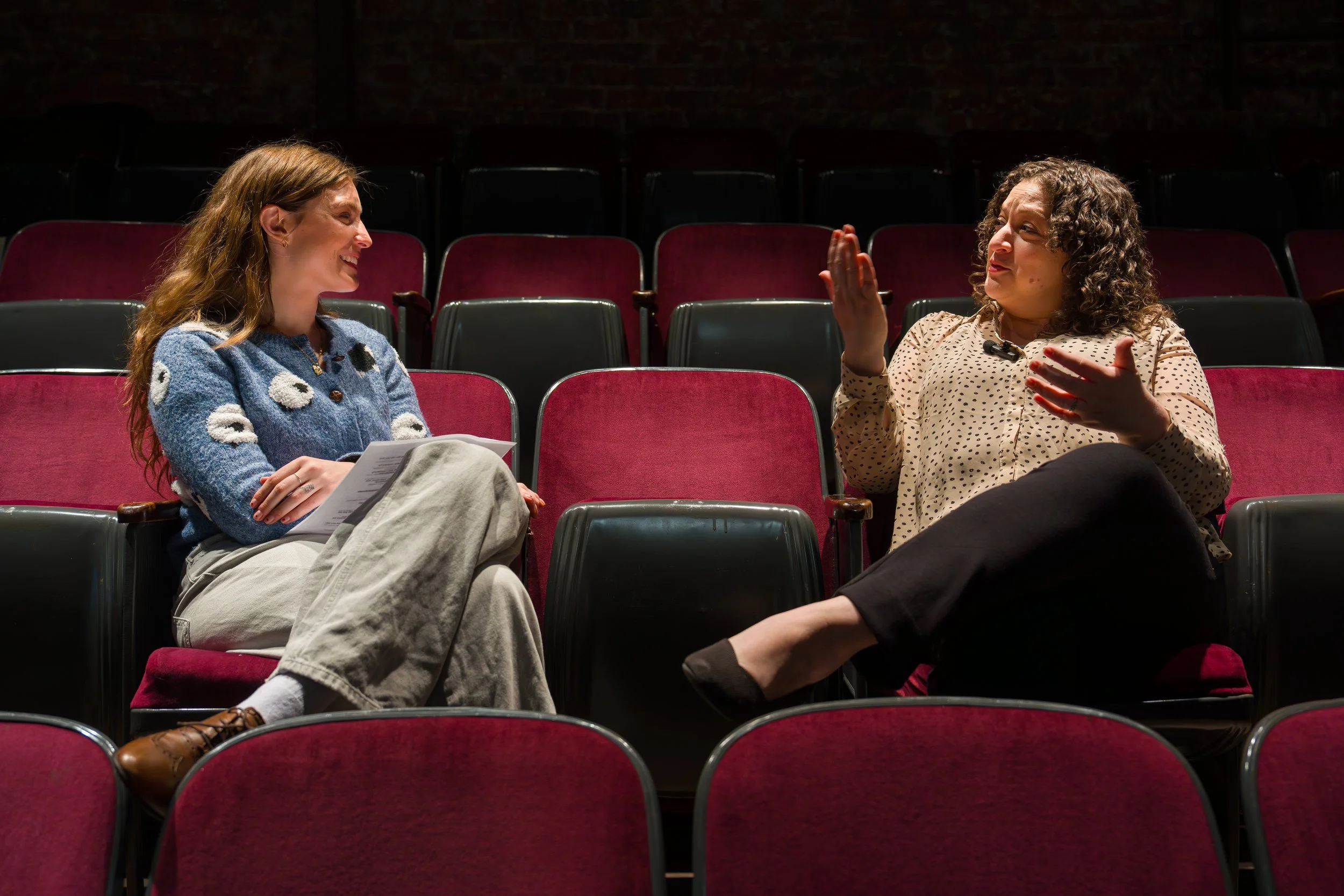
Photo: John Eng/SPNA
By Liza Giangrande
I recently sat down with Jill Rafson, producing artistic director of Classic Stage Company, inside CSC’s intimate thrust-stage theater just steps from Stuyvesant Square. From where we spoke, no audience member is more than 20 feet from the action—a detail that reflects the company’s commitment to making classic work feel immediate and alive.
Since stepping into the role in 2022, Jill has been shaping CSC as a true neighborhood theater—one rooted not just in reimagining classic works, but in deepening its connection to the surrounding community. We talked about her path to theater, the creative possibilities of CSC’s unique space, and what it means to build a cultural home in this corner of downtown Manhattan.
What was your first experience with theater that made you feel, ‘This is what I want to do’?
I always feel like every theater person has their “gateway drug.” For me, it happened in two parts. When I was a kid, my mom recorded the original Broadway “Into the Woods” when it aired on PBS, and I watched that VHS tape to death. I didn’t know who Stephen Sondheim was—I just knew I loved it. It stuck with me and sparked a real love of musicals.
Then in college, at Johns Hopkins—which didn’t really have a theater program at the time—I jumped in at the last minute to stage manage a student production of Tom Stoppard’s The Real Thing. I wasn’t the best stage manager because I kept getting distracted by how great the writing was. But I fell in love with being part of theater. From there, I just wanted to explore everything—writing, directing, producing—and I was sold.
Do you remember your first encounter with Classic Stage Company?
I do, very vividly. I came to see a production of “Uncle Vanya,” and we sat in the front row, which is basically in the show. I am not a front-row person. I don’t like audience participation.
But I remember one of the actors literally stepping over my foot to get to a piece of scenery. And I thought, this theater is intimate. That’s what I always associate with CSC.
Now I love telling audiences: no matter where you sit, you’re never more than 20 feet from the action. That’s such a rare experience.
How does the theater’s thrust stage shape what you do?
It forces creativity. You can’t rely on a back wall or traditional staging—we’re completely exposed in this space. That’s especially exciting given our mission of reimagining the classics. You literally can’t stage a play the way it was originally done, so you have to ask: how do we do this differently?
That challenge pushes directors and designers to create more interesting, surprising work. I think that’s why audiences keep coming back.
How do you define CSC’s artistic mission today?
It’s really about reimagining what a classic can be. That includes plays we already know—Shakespeare, Ibsen, Chekhov—but also expanding what we consider part of the canon.
Last season, we did “Wine in the Wilderness” by Alice Childress, an extraordinary Black playwright whose work was overlooked for decades. Bringing those plays back and saying, this belongs in the canon—that’s incredibly exciting to me.
The canon isn’t fixed. It’s always evolving.
What does a Producing Artistic Director actually do day to day?
There’s no typical day, which is one of the reasons I love it.
People think it’s just picking plays, but it’s really about building a full ecosystem—choosing collaborators, shaping how the work reaches audiences, fundraising, working with our board, managing budgets, supporting staff, and running education programs.
Every production has its own challenges, and there’s no template. It’s always changing.
How do you think about CSC’s role in the Stuyvesant Square neighborhood?
I was working in Midtown for a long time, and this is such a different energy. I always knew I wanted to work somewhere that felt like a neighborhood theater—not focused on tourists, but on building relationships with the people around us.
We’re trying to create a space where local audiences feel comfortable coming back again and again. That starts from the moment you buy a ticket to the way you’re welcomed when you arrive.
We don’t want a barrier between the people making the work and the people experiencing it—it has to feel collaborative.
How do you balance local audiences with broader theatergoers?
If we chase tourists, we won’t succeed. My focus is on building something sustainable, which means reaching local audiences.
When we did a show with well-known actors, their fans found us—but they may not come back. The people who live here, who return again and again—that’s who we’re building for.
Are there ways CSC connects with the neighborhood beyond performances?
Yes—we’ve launched a neighborhood rewards program with local businesses, so theatergoers can get discounts at nearby restaurants and shops. We want “going to the theater” to feel like a full experience.
We also offer things like free childcare at select performances, accessible shows for neurodiverse audiences, and student programs. The goal is to make it easier for people to say yes to theater.
What’s it like working in this neighborhood day to day?
It’s such a contrast from Midtown. People on our team love just walking around, going to the greenmarket, or grabbing coffee at Everyman Espresso—which is right in our lobby.
It’s funny—people will come in for coffee and have no idea there’s a theater here. We’re always trying to gently say, “Just walk a few steps further!”
How would you describe the character of this neighborhood?
It feels like a perfect blend—students, longtime residents, artists, great restaurants. People always seem to be on their way to something interesting.
And it has a different rhythm from the rest of Manhattan. There’s more space, more openness. That really changes how it feels to work here.
As a woman in a historically male-dominated field, how has your experience been?
I’m really encouraged by how much it’s changing. There’s a generational shift happening, and I’m seeing more collaboration and support among leaders than ever before.
We’re less siloed—we talk to each other, share ideas, and help each other navigate challenges. There’s a real sense that more good art benefits the whole city.
And I think you’ll start to see that reflected in programming—different voices, different perspectives shaping what gets put on stage.
What would you say to someone who has never been to Classic Stage Company?
We’re going to change how you think about classic plays.
“Classic” shouldn’t mean boring—it’s just a genre. And we pull from all across history, from the Greeks to contemporary writers. There’s always something different, something unexpected.
What is currently on stage at CSC?
We’re producing the New York premiere of a lost play by Thornton Wilder, “The Emporium.” It’s never been seen here before, and it’s an incredible opportunity to experience something new from a writer people think they already know. I think it’s going to surprise people in the best way.
***
As our conversation wrapped up, it was clear that Jill Rafson is thinking not just about the future of theater, but also about how it lives—intimately, accessibly—within a neighborhood. At Classic Stage Company, that vision is already being realized, just a few steps from the park.
“The Emporium” runs through June 7.
Learn more about Classic Stage Company: https://www.classicstage.org.