

A New Vision for Nature in New York City
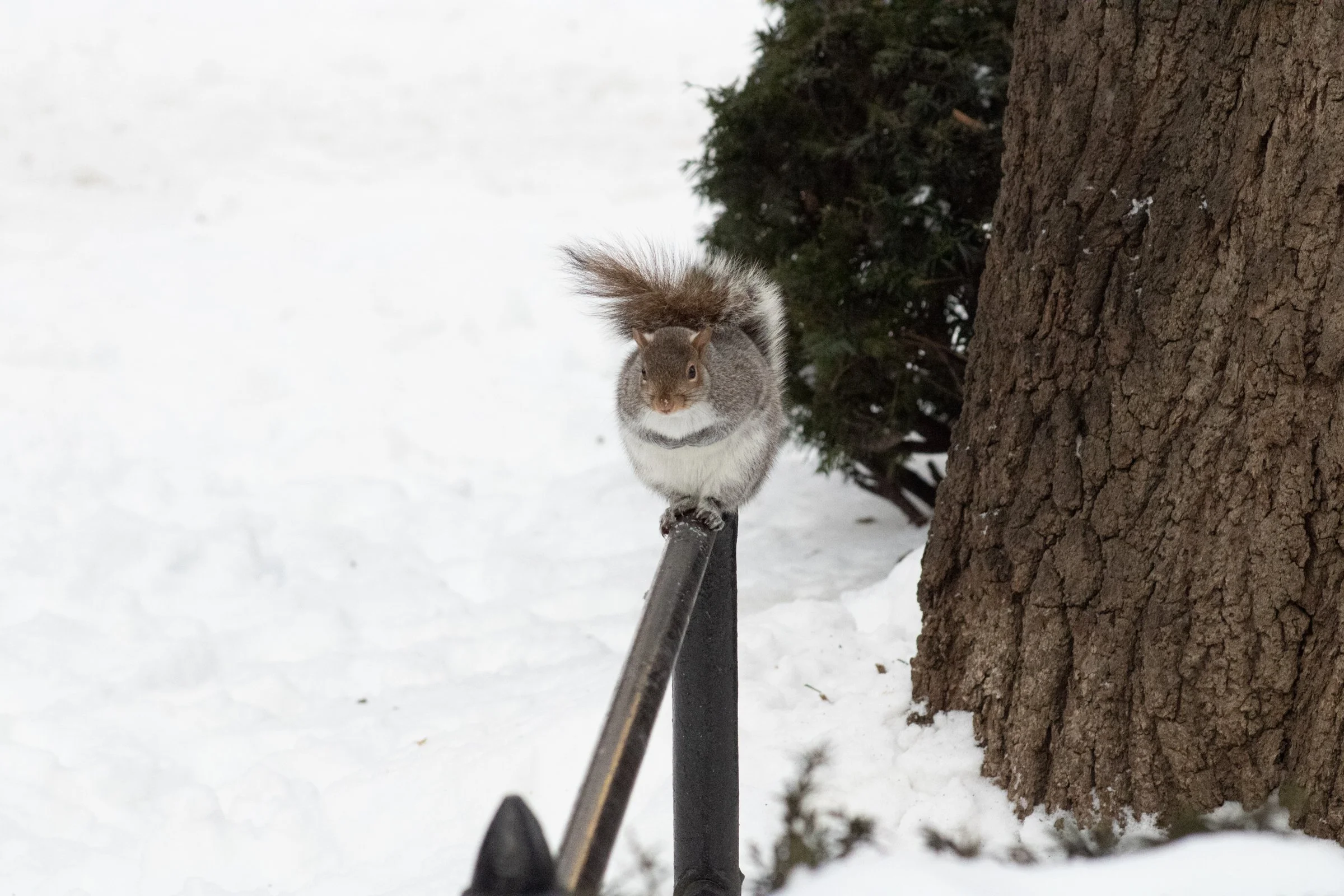
A squirrel perches on a railing on a winter morning at Stuyvesant Square Park. (Photo credit: Nafissatou Yattassaye/SPNA)
By Reynard Loki, SPNA
New York City is far more alive than it appears at first glance. Beneath the pavement and between the buildings, a surprising richness of life persists—migratory birds passing overhead, pollinators moving between gardens, and native plants pushing through urban soil.
A 2025 community-led report, Oaks, Our City, and Us, offers a bold and hopeful vision: a city where nature is not confined to a few parks, but woven into every neighborhood, every block, and every daily experience.
Why Biodiversity Matters—Right Here in Our Neighborhood
Biodiversity is not an abstract concept—it’s something we can see, hear, and feel.
It’s the presence of songbirds in the morning. It’s butterflies in the park. It’s shade from street trees on a hot summer day. And yes—it’s the squirrels of Stuyvesant Square Park, quietly doing the work of planting the future. By burying and forgetting seeds, squirrels help regenerate trees and sustain the park’s canopy over time.
But these everyday encounters with nature are increasingly at risk. Habitat loss, climate change, and urban development continue to erode the ecosystems that support both wildlife and human well-being.
This report makes a simple but powerful argument: protecting biodiversity is not just about caring about all the species that call New York home—it’s about improving the quality of life for all New Yorkers, human and non-human alike.
A greener, more biodiverse city is healthier, more resilient to climate impacts, and more equitable.
What the Report Calls For
The report lays out a clear set of priorities to guide New York City toward becoming a global leader in urban biodiversity:
Protect what remains — Safeguard existing habitats and species across all five boroughs
Green every neighborhood — Expand native plantings, pollinator gardens, and wildlife-friendly spaces
Invest in people — Support community stewardship, ecological education, and local expertise
Lead globally — Position NYC at the forefront of urban biodiversity innovation
Together, these actions would transform how nature is experienced in the city—not as a destination, but as a daily presence.
What This Means for Stuyvesant Square
Here in and around Stuyvesant Square Park, we already see glimpses of what’s possible: mature trees, seasonal plantings, and a steady flow of birds and pollinators.
This vision invites us to go further. Imagine more native plantings along our streets. More pollinator-friendly spaces in and around the park. More opportunities for neighbors—students, volunteers, and residents alike—to participate in caring for the living systems around us.
This is not a distant or abstract goal. It’s something that can take root right here.
How You Can Get Involved
This initiative depends on public support—and that’s where neighbors like you come in.
Read the report and explore its recommendations
Sign on to show City leaders that biodiversity matters
Share the vision with your network
A simple action—reading, signing, or sharing—helps build the momentum needed to bring this vision to life.
A Living City, A Shared Responsibility
New York has always been a city of energy, movement, and reinvention. This report asks us to expand that identity—to see the city as a living ecosystem, not just a built environment.
The future it imagines is not only greener, but more connected: to nature, to each other, and to the places we call home. The question is not whether this future is possible—it’s whether we choose to make it happen.