Life Park: Memories of Stuyvesant Square Park
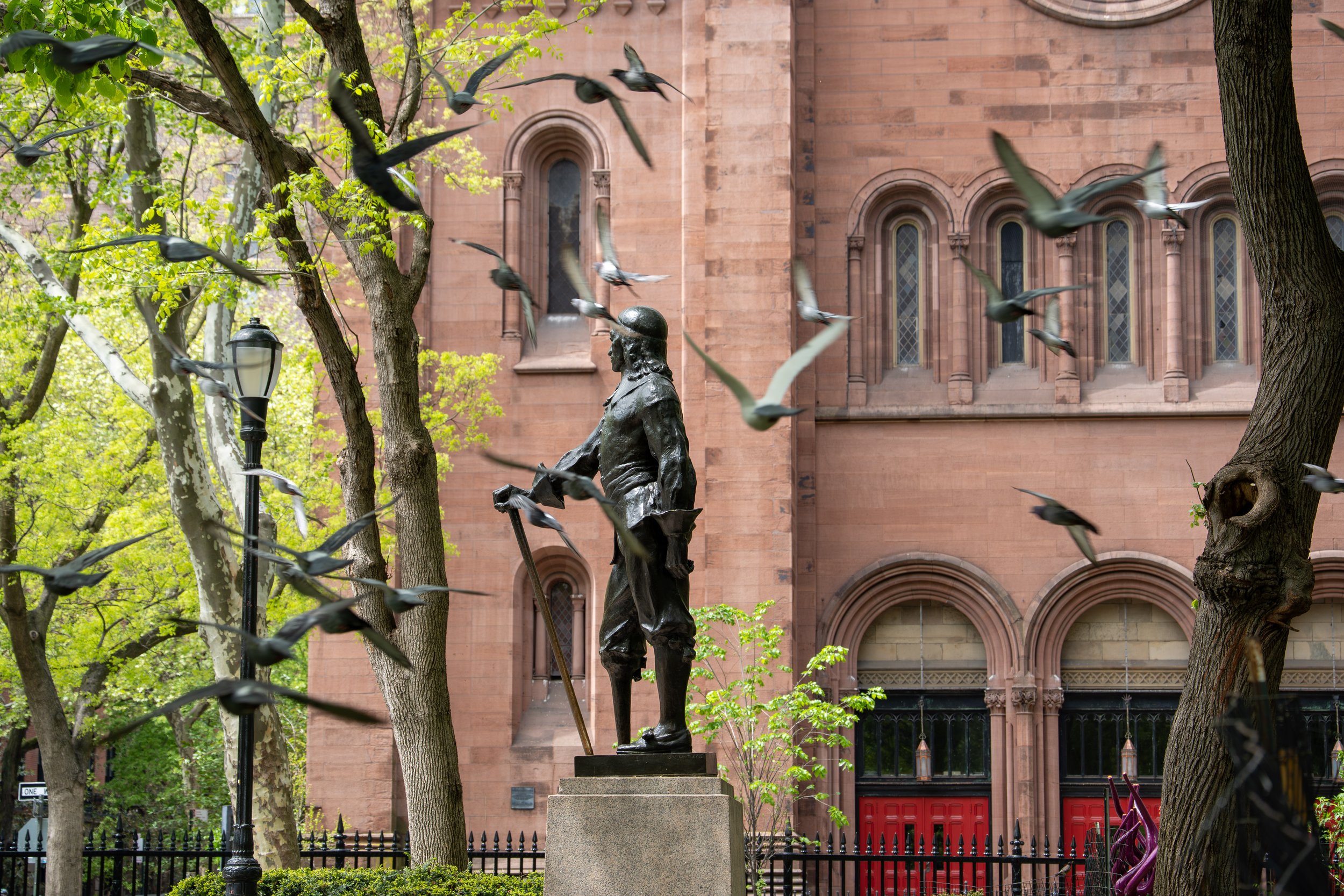
On a recent spring afternoon, a flock of pigeons swept past the iconic statue of Peter Stuyvesant in Stuyvesant Square Park. (Photo by John Eng for SPNA)
By Preston Look
My first seven years as a New Yorker were spent a block away from Stuyvesant Square Park, in a small hotel-like room on 14th Street.
Back then, I spent a lot of time exploring the city and its square parks. Union Square, Washington Square, Tompkins Square. I visited them all. But Stuyvesant Square Park was always my favorite. It still is.
It has everything a New York City square park should. Classic green, wood slatted benches lining the paths, cast-iron lampposts, and a canopy of leaves in the summer months made by the trees. A flagpole, fountains, and statues of historical figures with dubious dealings in their past.
But Stuyvesant Square Park has Peter Stuyvesant, the first director of New Amsterdam, sent from the Old World to tame the unruly denizens of the new. Tall. Dark. Leg cut off mid-calf. A wooden peg in its place. A slightly menacing figure striding toward you with a heavy stick at his side. No wonder it always felt like a secret oasis of calm while the rest of Manhattan raged around it.
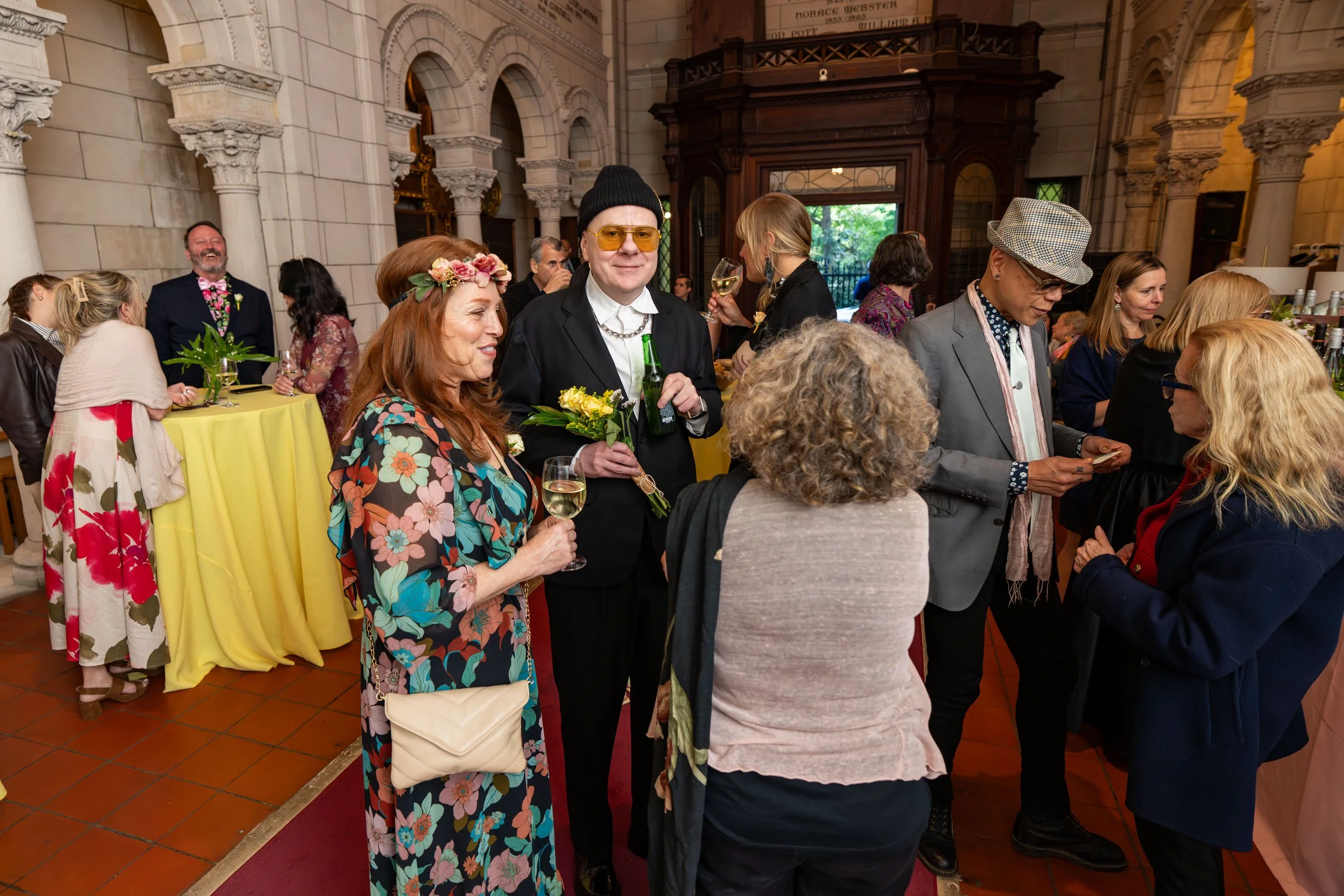
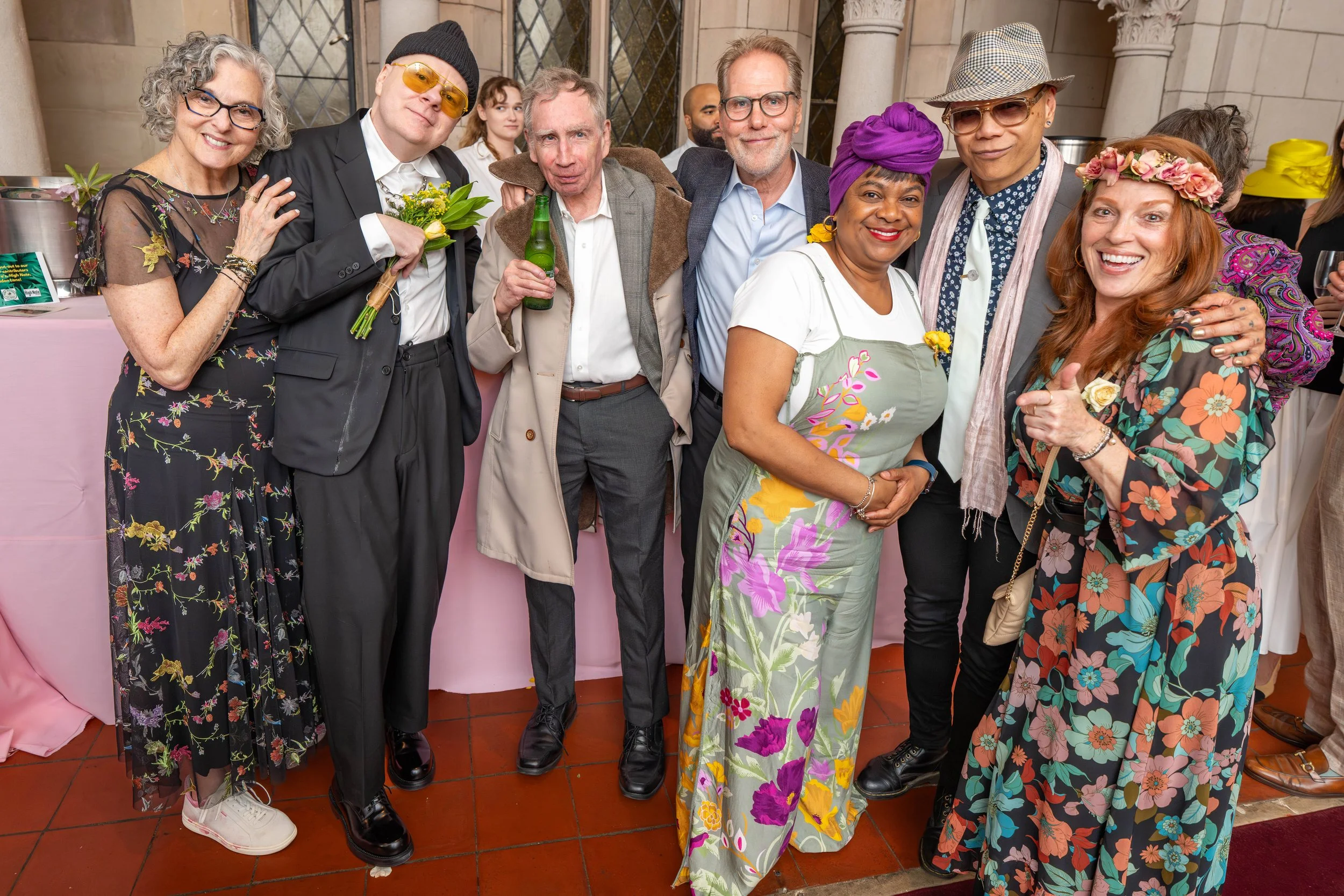
So when I heard the Stuyvesant Park Neighborhood Association was hosting its annual spring gala at St. George’s Episcopal Church just across from the park, I bought a ticket.
At Beauty Bar, over a martini—a prerequisite for any activity with the word gala in it—I was dressed head to toe in black, but still confident I would meet the “something floral” dress code.
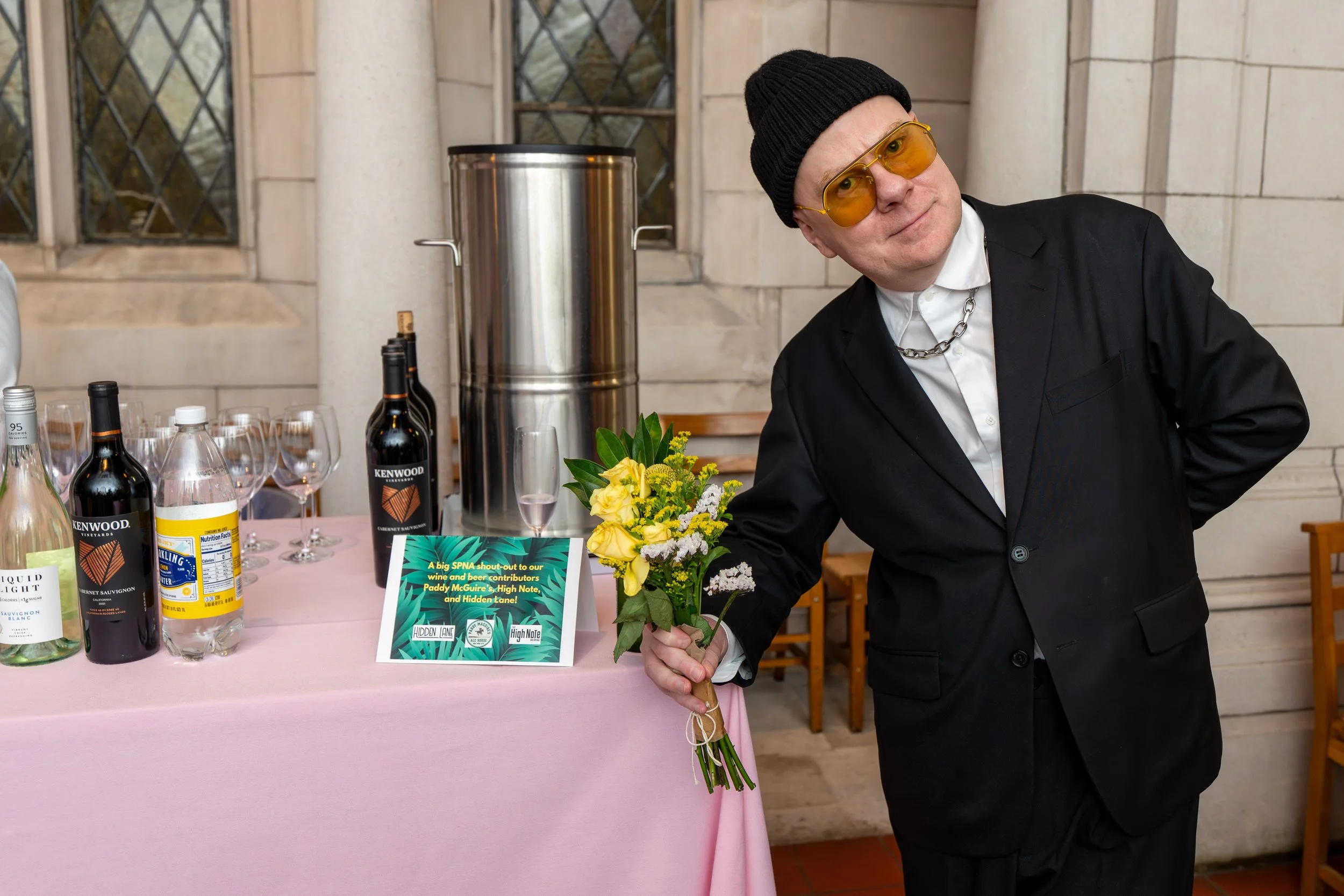
The night before, I bought flowers from Whole Foods on Houston Street and put them in water to keep them alive. If only life were that easy.
The flowers were still fresh in the morning, but I had no idea what to do with them. Stuff them in a pocket like Morrissey? Make a crown? Things were looking dire until a sandwich I bought for lunch came wrapped in butcher paper and string. A hand bouquet. I just had to hold it all night.
Would Peter let me pass?
There’s a bust of the Austrian composer Dvořák in the northwest corner of the park, just steps from where he wrote From the New World. His Ninth Symphony. But there’s never been any doubt which side of the square, split down the middle by 2nd Avenue, is my favorite. The side I lived on. The side Peter Stuyvesant stands over. The side I walked through to get to the party.
Slightly gilded by the gin, I moved through the cool early spring air with ease, and the memories began to collect.
Sitting by the fountain on summer afternoons, watching people cut through the center of the park on their way to something, or nothing at all.
Listening to Yankee games before their announcer, John Sterling, retired. Headphones in, the antenna of my little Sony radio pulled as high as it would go.
Good wine at dusk, far from where Peter might see the infraction.
Looking up into the window of the Mount Sinai Hospital room I was taken to after being defibrillated back to life, twice, on the floor of the YWCA on 14th Street. That feeling of being down in the park instead of up there, in a bed attached to a machine. Whenever that room’s light was on, though, I knew someone else was.
My first Thanksgiving as a resident of New York. Nothing to do, nowhere to go. I walked through the park and felt like I was the only person on earth, except for Mr. Stuyvesant. I was pretty ok with it.
One night, about thirty minutes before they closed the park and locked the gate, my daughter and I sat at one of the tables eating Taco Bell. It started to rain. And as the clouds let go, so did she, of everything she had been meaning to tell me. Things I already knew. That I wasn’t present. That I was resentful. That I created a life other people weren’t allowed to be part of.
We cried a bit and felt better. She apologized. No, I said. This is the perfect place to air things out. Councilor Stuyvesant, ultimate mediator, was there to keep things civil.
She called it “Life Park.”
I thought that was pretty good.
Just inside the door of St. George’s, a grand piano was being played. The first thing I noticed when I walked in was how long a grand piano is. A woman at the end of it was singing something from the American Songbook, but I can’t remember which song it was.
Tall, flowering branches ran the length of the nave, balanced by fuller arrangements resting on the tables where people stood about talking.
It mattered little that I knew no one there. The park was the ultimate conversation starter. Several times over, I shared how I used to live on 14th Street. How Stuyvesant Park was my favorite of the square parks and still is. But I never talked about the things I thought about as I walked through it to get there that night.
Not wanting to break code, or worse, appear unfestive, I orchestrated sips of my Spring Fling—the evening’s house cocktail—with my bouquet and a napkin in one hand while indulging in whatever canapé happened to be floating by with the other. This went on for some time until a second Spring Fling was had, along with a third skewer of fried chicken paired with a little syrup-covered tile of waffle.
The flowers. The fling. A third chicken waffle stick. It was too much to manage. I dripped a two-foot trail of syrup down the front of my jacket.
Quietly, I made my way along the side of the room toward the exit, where the lush greenery of Stuyvesant Square Park swayed in the gentle evening breeze just out the open doors. As I passed the piano, the duet launched into another song. This time, its opening melody was unmistakable. Immediately, I knew it was Misty.
How strange, I thought.
Standing there in front of the church, a sticky mess of roses and syrup, with Peter Stuyvesant stoic among the trees across the way.
The song had meaning. But I couldn’t bring myself to live it again.
Preston Look is a writer and creative strategist based in New York City. Find him online at Substack and Instagram. Photography by John Eng for SPNA.